




China Power Changshu Thermal Power and General Electric Reached a Technical Service Agreement on Gas Turbine Operation
On April 1st, China Power Changshu Thermal Power Co., Ltd. and General Electric Energy (China) Co., Ltd. (GEV) signed a contract for the procurement and maintenance of the hot-section components of 6F.03 gas turbines. With this contract, the two companies formally established a collaborative partnership, which will lay a solid foundation for the safe and stable operation of the gas turbines at Changshu Thermal Power and the enhancement of its operational management.
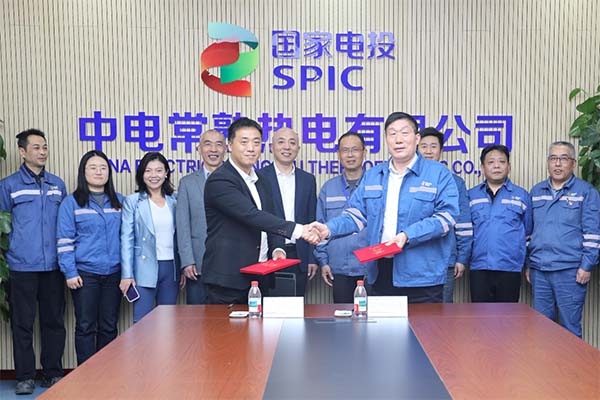
This long-term service agreement for gas turbines is a significant procurement initiative during the operational phase of a gas turbine power plant, directly impacting critical aspects, such as work safety, environmental protection, technological innovation, operational management, and cost optimization throughout the entire lifecycle of gas turbines. There are significant differences among the main industry service models in terms of service scope, prices and costs, and power plant management requirements. To reduce costs and improve efficiency, China Power Changshu Thermal Power conducted thorough research and analysis and drew on the procurement experience from similar projects in China, and then engaged in technical and commercial negotiations with suppliers regarding core items such as the scope of supply, unit and total prices, performance terms, and safety agreements. This brought about the optimized zero-order (TX+) service model, which differs from the traditional standard service model and enhances cost-effectiveness and management flexibility. During the negotiations, the company accurately predicted the trend of the RMB exchange rate against the US dollar, effectively hedging against exchange rate volatility risks and realizing an expected currency appreciation gain of nearly 5 million yuan.
This contract mainly covers the procurement of a set of 13 major hot-section components, one round of medium maintenance service and the repair of components, and also includes provisions for expanding the scope of supply by more than 6% without increasing the price. The calculation shows that, compared with the traditional models in the industry, this service model can reduce the total life-cycle investment in gas turbines by 25% under the current price and exchange rate, while greatly improving the management flexibility of maintenance service, effectively lowering operating costs and enhancing operating efficiency.